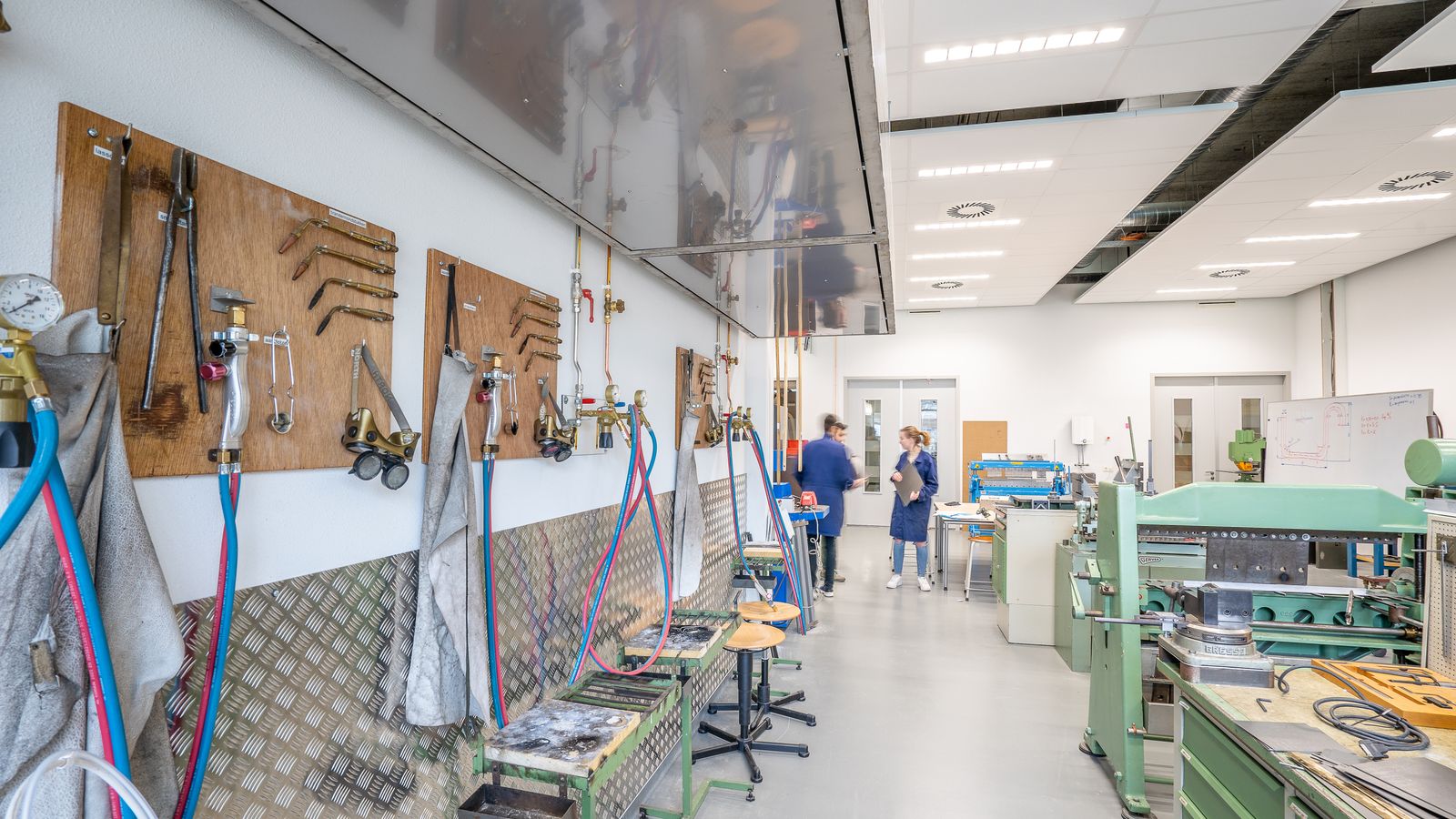
Every machine, and what it will hold
Eight machines across two shifts, plus the room where we find out whether the part is right.
Machine list
Travels, spindle speeds and bar capacities, because those decide whether your part belongs here.
| Milling | |
|---|---|
| Haas VF-4SS | 3-axis, 50 x 20 x 25 in. travels, 12,000 rpm, 30-tool side mount, through-spindle coolant. |
| Haas VF-2SS (two) | 3-axis, 30 x 16 x 20 in. travels, 12,000 rpm. The pair that carries the repeat work. |
| Haas UMC-750 | 5-axis trunnion, 30 x 20 x 20 in., 8,100 rpm, 40-tool changer, probing on both shifts. |
| DMG Mori DMU 50 | 5-axis, 500 x 450 x 400 mm, 20,000 rpm, thermal compensation. Thin-wall aluminum and titanium live here. |
| Turning | |
| Doosan Puma 2600SY | Sub-spindle and Y-axis, 3 in. bar, 12 in. swing, bar feeder running unattended overnight. |
| Haas ST-20Y | Y-axis live tooling, 2.6 in. bar capacity, 10 in. chuck. Parts come off complete. |
| Haas ST-10 | Small-part lathe kept for prototypes, so the production lathes never come down for a one-off. |
| Inspection | |
| Zeiss Contura CMM | 700 x 1000 x 600 mm, scanning head, isolated slab, 20 +/- 1 C room with its own air handler. |
| Keyence IM-7020 | Optical comparator at the machine: ninety-nine dimensions in seconds, so drift is caught mid-run and not at final. |
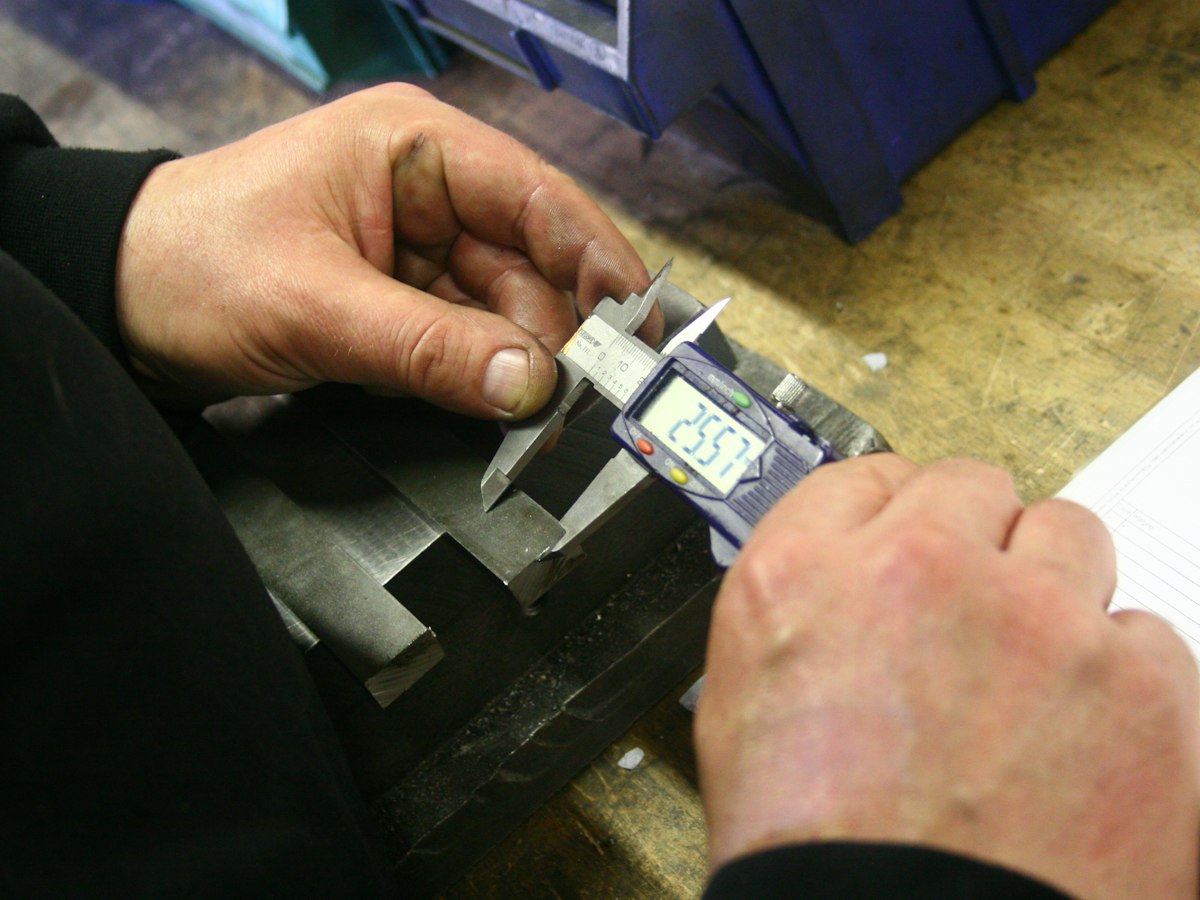
| Gauge crib | Micrometers, bore gauges, height gauge and ring gauges, calibrated quarterly against NIST-traceable standards. |
| Support | |
| Sawing and stock | Two horizontal band saws and a rack of 6061, 7075, 303, 304, 316L and 17-4 in common sizes. |
| Deburr and finish | Dedicated bench, vibratory tumbler and a bead-blast cabinet. A burr is a rejection like any other. |
Spindle hours, tooling and fixture history are logged per machine. Ask what has run on yours and we will tell you.
Parts we have run
Four jobs from the last quarter, and what was difficult about each of them.
6061 manifold, eleven ported faces, two setups 
Ti 6Al-4V bracket, 0.030 in. wall 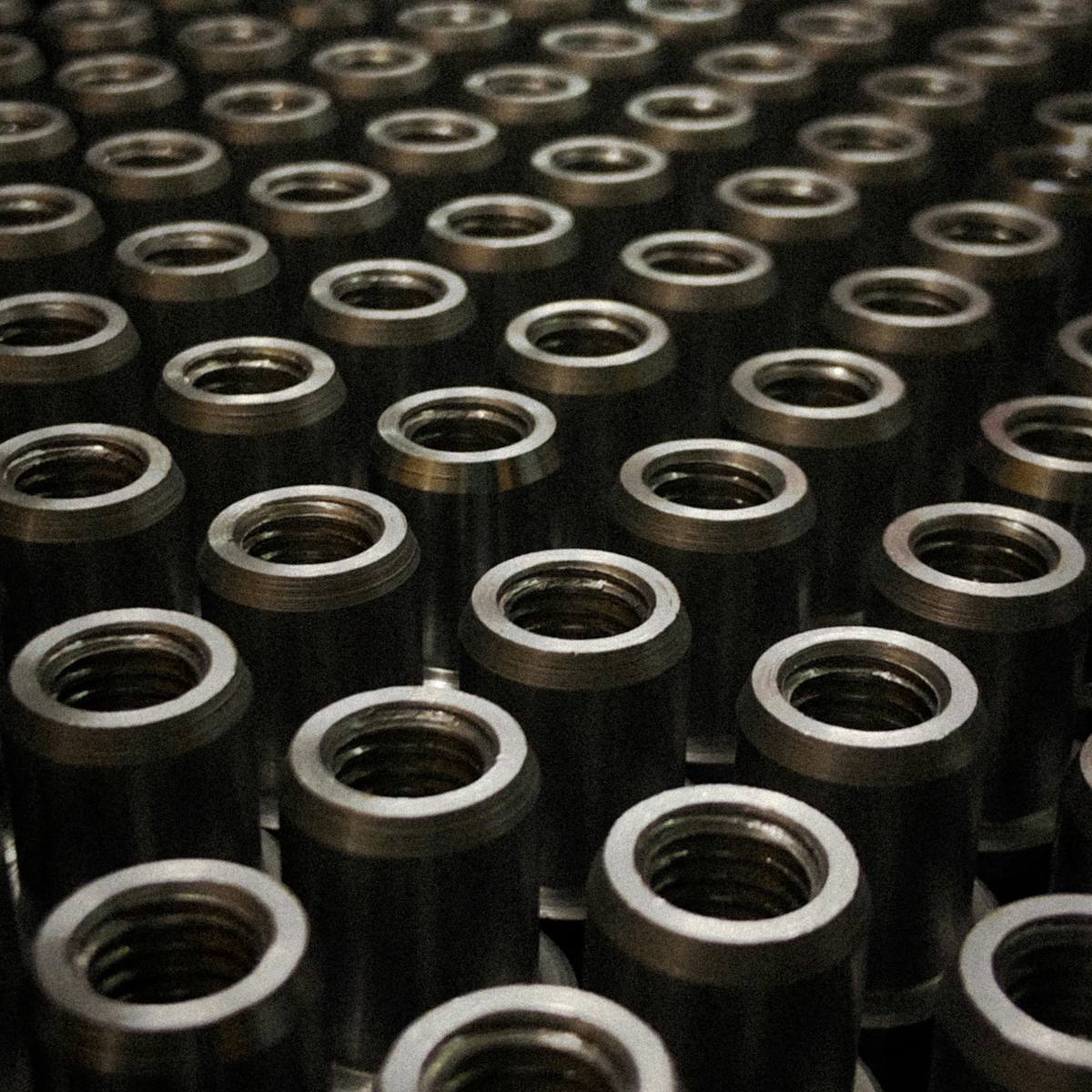
PEEK insulator, run in the plastics cell 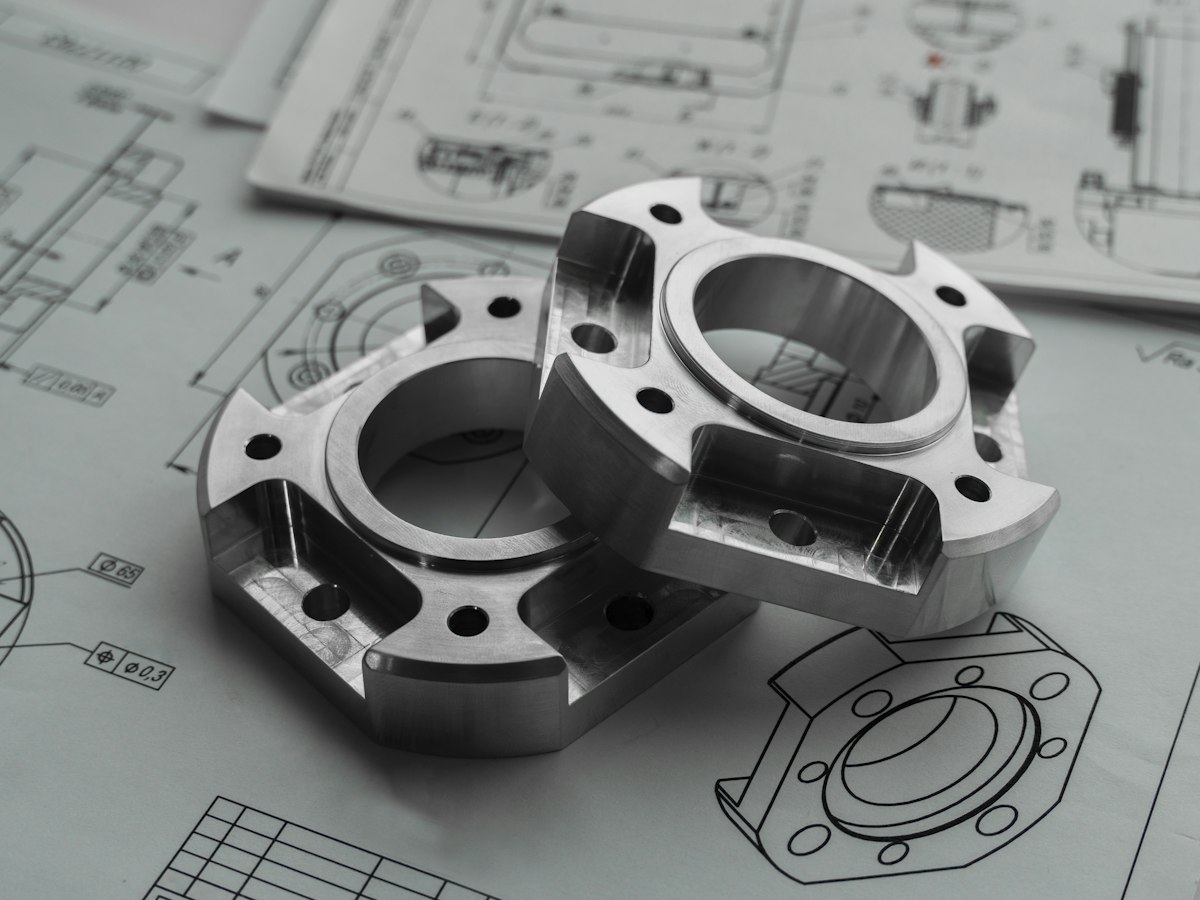
Production release, 2,400 pieces of 316L
Two shifts, and a third that runs dark
First shift sets up, second shift runs, and the mills keep cutting overnight on tool-life monitoring and in-process probing with nobody in the building. Only programs we have proved out go dark. A first article never does.
Every machine carries a fixture history and a spindle-hour log. When you reorder, the part goes back on the machine it ran on, with the same fixture and the same offsets. That is unglamorous, and it is most of the reason the second order measures like the first.
Not sure which machine your part belongs on?
Send the model. We will tell you the setup count and what it does to the price before you commit to anything.